A memo from one founder to another.
I keep a folder of screenshots from investor updates founders share with me. The tone changed this year. Less "we're growing," more "we're making the runway last."
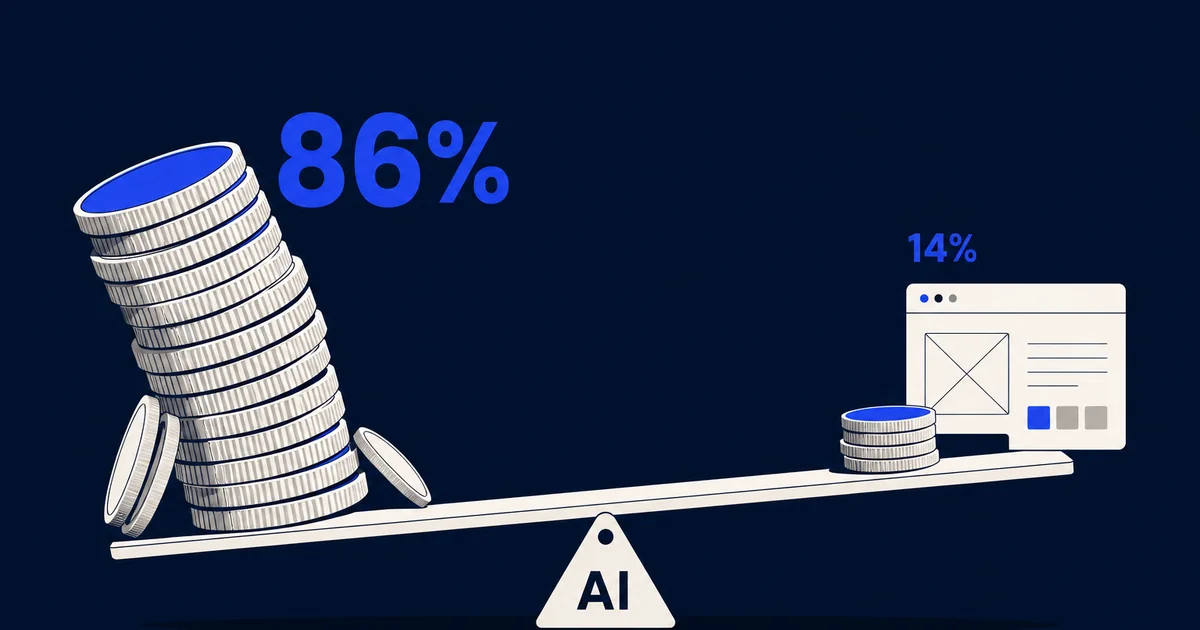
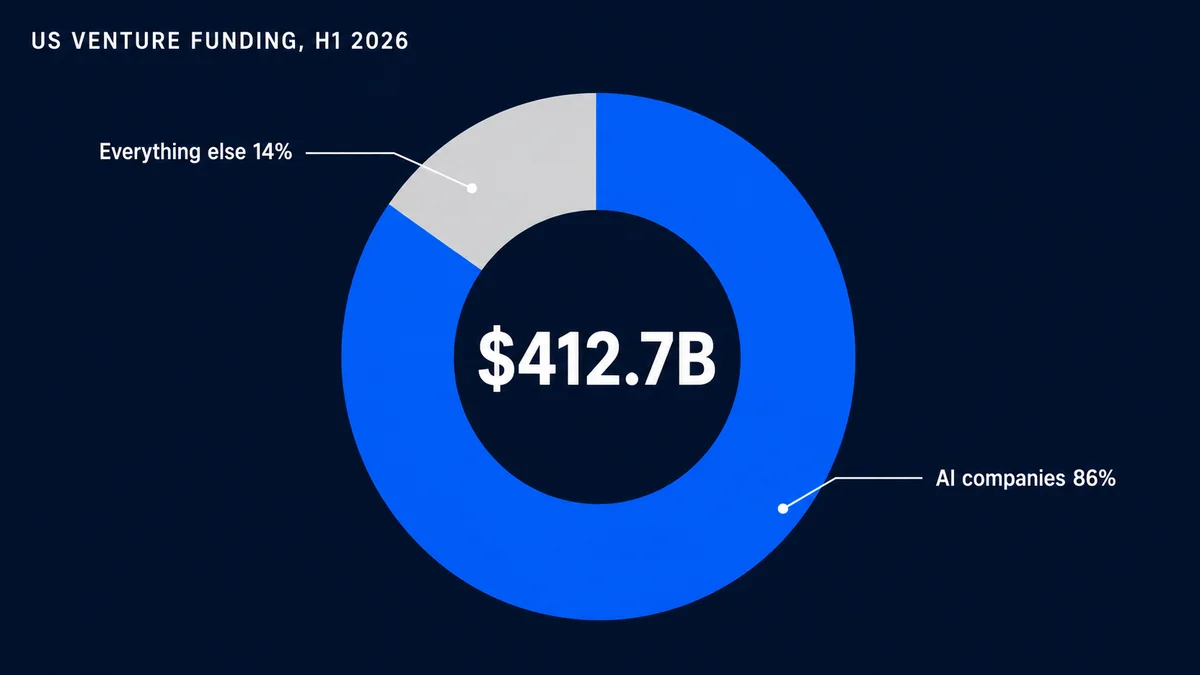
Here's the number behind that tone shift. In the first half of 2026, US venture funding hit $412.7 billion. About 86% of it went to AI companies. That is the most extreme concentration the venture industry has ever recorded.
Read that from the other side of the table. If you're building an AI company, capital is chasing you. If you're building anything else, a SaaS product, a marketplace, a healthtech tool, a fintech app, you are competing for 14% of the pool. Your next round is slower, smaller, and pickier than it would have been two years ago.
of the $412.7B raised went to AI companies — the most concentrated the venture industry has ever recorded. Everyone else competes for the other 14%.
This memo is about one line item in that new reality: your product design budget. I run a product design subscription, so yes, I have a horse in this race. But I've also watched 170+ clients at our parent studio handle this exact decision since 2017, and the founders who get it right follow a pattern. Four moves.
Move 1: Don't hire your first designer yet
The instinct when design becomes a bottleneck is to open a job req. Run the real math first.
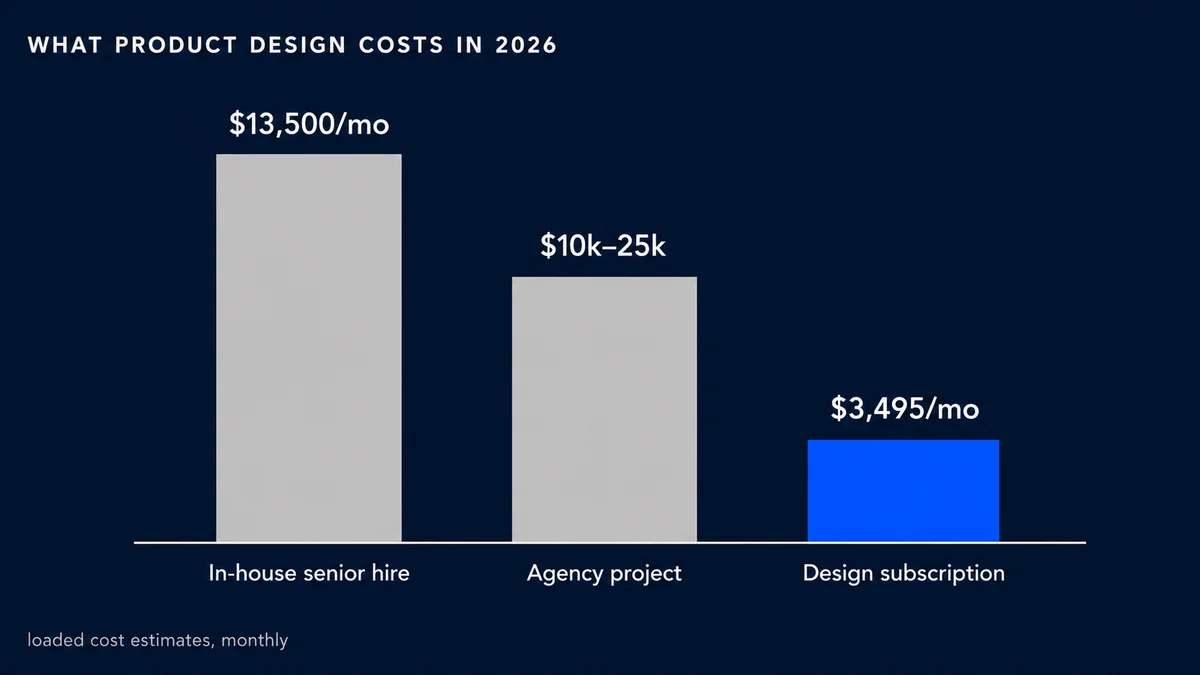
A senior product designer in the US costs $130k+ in base salary. Add benefits, equipment, and payroll overhead and you're at $160k or more per year, roughly $13,500 a month. That gets you one person, one skill set, one point of failure. If they're sick, design stops. If they resign, you lose three months to hiring and onboarding. And a solo designer still can't build the Webflow site or the Framer landing page, so you're paying contractors on top.
Design agencies solve the skill-coverage problem but bill $10k–$25k per project with weeks of lead time, and every new request is a new negotiation.
The subscription model exists because both of those options fit badly with how startups actually consume design: in bursts. Market data this year puts design-as-a-service retainers between $3,000 and $15,000 a month depending on team depth. For context, DesignShare sits at the bottom of that band, $3,495 a month for a senior product designer, a Webflow/Framer developer, and a project manager. That's about a quarter of the loaded cost of one in-house hire, for a full working unit.
I wrote a full cost breakdown of subscription vs hiring vs agency in an earlier post if you want the line-by-line version.
When should you actually hire in-house? When design work is truly full-time, every week, and strategic enough that the designer needs to sit in your product meetings. Most startups hit that point after product-market fit, not before. Until then, a hire is a fixed cost pretending to be a growth investment.
Move 2: Buy a system, not a seat
Here's the part most founders miss when they compare prices. You're not really choosing between "a designer for $13,500" and "a subscription for $3,495." You're choosing between a seat and a system.
A seat is one person you now have to manage: brief them, review them, unblock them, keep them busy enough to justify the salary.
A system is a queue you drop requests into and get finished work back from, in about 48 hours in our case. The management overhead transfers to the provider's project manager. For a founder whose actual job is talking to customers and raising the next round, that overhead transfer is worth more than the price difference. Time is the scarcer asset.
One honest caveat: a subscription works one active request at a time. If you need six workstreams running in parallel every single week, you've outgrown the model and should build a team. Most pre-Series-B companies never get close to that.
Move 3: Use the pause button as your budget control
This is the move that makes CFOs pay attention in the current funding climate.
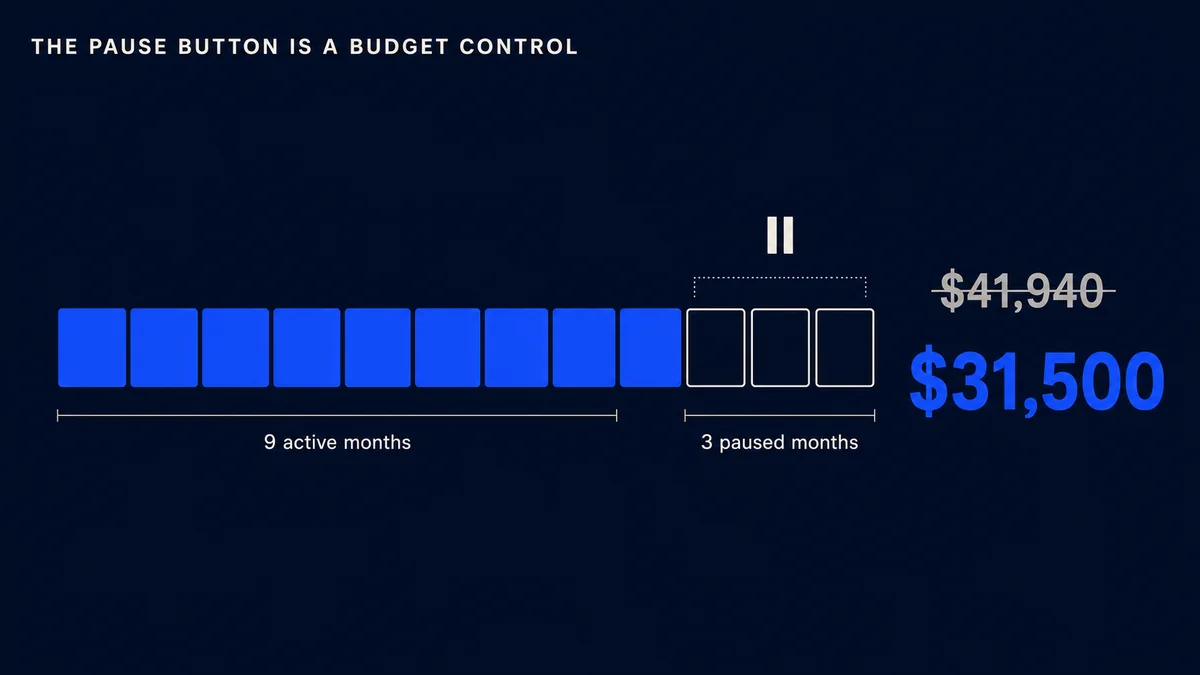
Salaries don't pause. Agency retainers rarely pause. A good design subscription pauses whenever you want, and unused days roll over. Shipping a big release in March and then heads-down on sales in April? Pause. You just cut that month's design spend to zero without firing anyone, breaking a contract, or losing your place in line.
Over a year, a startup that pauses three months pays about $31,500 instead of $41,940. Try doing that with a salary. The point isn't the exact number. The point is that design becomes a variable cost that tracks your actual shipping cadence, which is exactly what a 14%-of-the-pool funding environment demands.
Move 4: Let AI draft, but pay for judgment
You might be reading this thinking: why pay for design at all when AI tools generate screens in minutes?
Use them. We do. AI has roughly doubled our drafting speed, and pretending otherwise in 2026 is malpractice. But 91% of designers now use AI weekly. When everyone has the same tools, the output converges, and buyers have started to recognize the sameness. I've written before about whether AI replaces designers, and the answer keeps landing in the same place: AI compresses production, not judgment.
Judgment is knowing which of the five AI drafts fits your brand, why your checkout flow leaks trust on mobile, and what your specific customer needs to see before entering a card number. That's the layer you're actually buying when you pay a senior team. The drafting layer got cheap. The judgment layer didn't.
The decision rule
If you want this whole memo compressed into one rule for the AI funding era:
Your product compounds. Your customer relationships compound. A design salary doesn't compound; finished, shipped design work does. So make design output senior and fast, and make the cost structure something you can turn down in a slow month.
That's the model we built. A senior product design and web dev team, flat $3,495 a month locked for life, ~48 hour turnaround, pause anytime, and a 7-day 75% money-back guarantee so trying it isn't a bet. See what's included in the subscription.